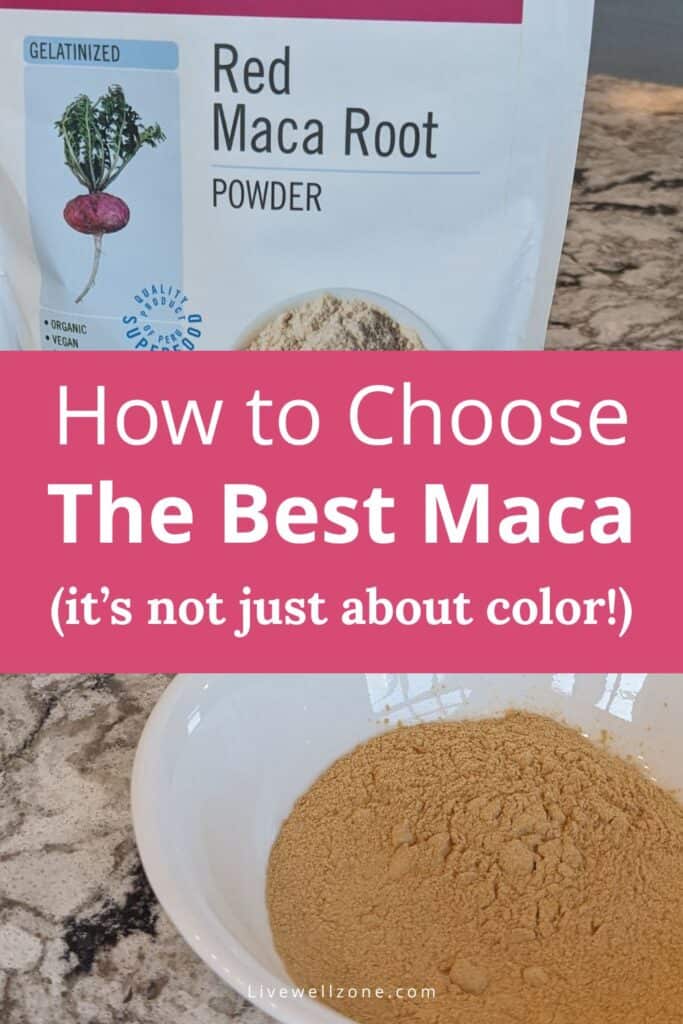
If you’ve ever stood in the supplement aisle (or scrolled through a maca website) and felt completely overwhelmed by the options, you’re not alone.
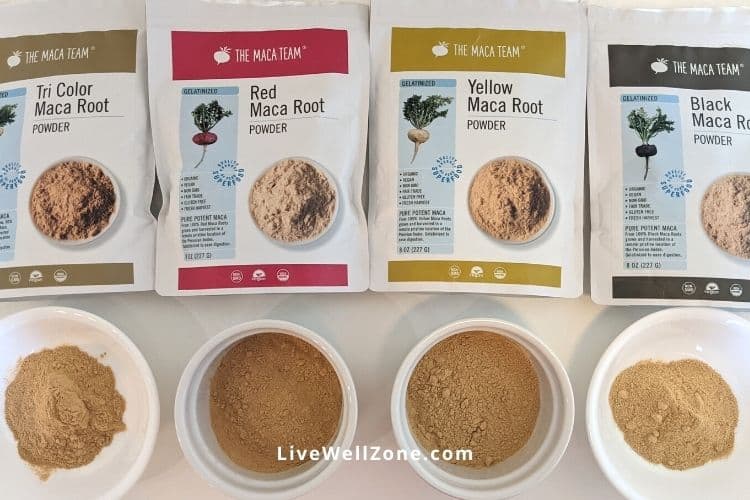
Red maca. Yellow maca. Black maca. Raw. Gelatinized. Powder. Capsules. Tricolor. Premium. Extract.
It’s a lot to take in!
And most articles about maca (including some I’ve written on this blog) explain the differences without really helping you figure out which one is actually right for you.
So, that’s the gap I want to fill today (with a little help from the only brand I’ve ever used, The Maca Team).
Note: This post contains affiliate links. If you make a purchase through my links I earn a small commission at no additional cost to you. I only recommend products I genuinely believe in.
Why choosing the right maca actually matters
Taking the wrong type of maca for your body and your goals means you might not get the results you’re hoping for. And then you can end up writing maca off entirely, when it actually could have helped you.
The right maca for a woman going through midlife changes isn’t necessarily the same as the right maca for someone focused on building muscle or supporting fertility.
And the right form of maca for someone with a sensitive digestive system is definitely not the same as what works for someone with an iron stomach.
These distinctions matter more than we realize.
The thing most maca articles don’t talk about
Almost every maca article you’ll find online focuses on color: red for women, black for men, yellow for everyday support.
And yes, the color matters.
But there’s another factor that most articles skip completely: your digestion.
Whether your digestive system is sensitive, average, or strong actually determines whether raw or gelatinized maca is the better fit for you.
Gelatinized maca has been cooked, which makes it easier to absorb and gentler on the gut. Raw maca, on the other hand, retains more of its natural compounds but can be harder to digest for some women (Side note: in Peru where maca has been used for thousands of years, they cook it into a porridge).
This is exactly the kind of detail that gets lost in generic maca guides.
And it’s one of the reasons why some women don’t respond well to maca even when they’re taking a good quality product.
Four questions that lead to the right answer
The Maca Team – the brand I personally recommend for quality and sourcing – has this short quiz on their website that cuts through all the confusion. It asks four simple questions:
- Your gender.
- The state of your digestive system.
- What you’re most hoping maca will help with (midlife changes, stress, mood, bone health, etc.
- Whether convenience, cost, or portability matters most to you.
Based on your answers, the quiz gives you a personalized recommendation.
No guessing or scrolling through pages of options wondering what the difference between premium raw tricolor and gelatinized red actually means for you.
Why I trust The Maca Team
I’m particular about the brands I recommend, especially for something like maca where quality varies widely. The Maca Team is a small, family-run company that sells maca products exclusively. It’s all they’ve done for about 2 decades now
Their maca is also sourced from from Peru, and they work closely with local farmers.
The fact that maca is the only thing they sell is what really got my attention when I first came across them years ago. That sealed the deal for me.
Ready to find your maca?
If you’ve been curious about maca but haven’t known where to start,or if you’ve tried it before and weren’t sure you were taking the right type, the quiz just might give you the clarity you need.
👉 Take the quiz to find out which maca is best for you
It takes about 1 minute and doesn’t require an email or sign up.
And if you want to go deeper into how maca works and how to use it, I’ve written a complete beginner’s guide here. Plus, you can check out this breakdown of the best maca supplements for menopause if that’s where you are in your journey.