
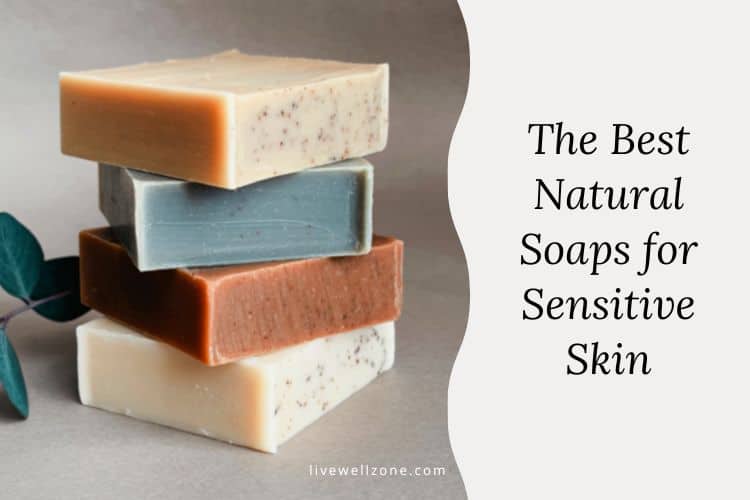
If you have sensitive skin, finding a soap that doesn’t leave your face feeling tight, stripped, or reactive can feel like a real challenge since a lot of commercial soaps tend to be quite harsh.
While there is no one-size-fits-all answer, there are some simple guidelines that can help you choose a soap that actually supports your skin instead of fighting against it.
In this post, we’re going to look at:
- The types of ingredients to look for (and which ones to skip)
- 5 natural soap brands for sensitive, reactive skin
- Gentle soap-free options if bar soap just isn’t your thing
A quick note: this is a wellness and lifestyle guide based on my own experience as a natural skincare enthusiast and health coach. It’s not medical advice. If you have specific skin concerns, it’s always a good idea to check with a qualified skincare professional.
Note: this post contains some affiliate links, and I earn a small commission (at no additional cost to you) if you use them to make a purchase.
What Kind of Soap Is Best for Sensitive Skin?
Whether you’re using a bar soap or a liquid cleanser, sensitive skin tends to do better with a soap that is:
Free of harsh surfactants
Surfactants are detergents, and some of them can be really harsh on delicate skin. The main ones I’d skip are sodium lauryl sulfate and sodium laureth sulfate. Instead, look for gentler options like sodium lauroyl isethionate, cocamidopropyl betaine, and decyl glucoside.
Made with mildly cleansing fats
In handmade and artisanal soapmaking, soap is made through a chemical reaction between fats and lye. But some fats (like coconut, palm kernel, and babassu oil) produce soaps that can feel too stripping on sensitive skin. Look for gentler soaps made with olive oil, butters, sunflower oil, safflower oil, evening primrose oil, or hemp seed oil.
Fragrance-free
Whether it’s synthetic fragrance or natural essential oils, fragrance is one of the most common triggers for reactive skin. When in doubt, skip it.
Botanical-based
Some natural additives feel really soothing on sensitive skin and a few worth considering are honey, oats, goat milk, carrots, and herbs like calendula, lavender, chamomile, aloe vera, green tea, licorice, and turmeric.
Free of common irritants
For sensitive skin, I’d skip cleansers with alpha hydroxy acids, synthetic preservatives, camphor, menthol, peppermint oil, and eucalyptus oil. They often leave reactive skin feeling worse, not better.
5 Natural Soap Brands for Sensitive Skin
A quick note that for the brands in this section, the only ones I have personal experience with are Crate61 and Chagrin Valley.
1. Crate61
This is the first brand I want to mention because I’ve been using their products since 2023 (it’s now April 2026 as I write this).
Here’s some context: I used to make my own soaps at home. I’ve done hot process, cold process, added clays, scented them with essential oils, etc.
Basically, I know what it takes to put good ingredients into a bar of soap.
But life got busy, and I just didn’t have the time anymore. So I started looking for a natural soap brand that used the exact ingredients I would have chosen for myself, with no harsh fillers or weird additives.
Crate 61 was it. They’re a Canadian natural soapmaker, and their soaps are made the way I would make them, which is why I’ve been using their products for years.
Their castile soap is very creamy and gentle (unscented) and they also have variety packs (I’m partial to the For Her pack!).
2. Chagrin Valley Soap and Salve
When I want to try something new, this is another brand I trust.
All of their ingredients are organic, and they keep their formulas free of weird additives. For preservatives, they rely mainly on rosemary extract to keep the soaps fresh and prevent the oils from going rancid.
A few soaps from this brand worth checking out:
Castile & Cocoa: unscented, made with olive oil, babassu oil, and cocoa butter.
Castile & Shea: unscented, with olive oil, shea butter, sunflower oil, goat milk, castor oil, lavender, and rosemary extract.
Milk and Honey Baby Soap: unscented, with sunflower oil, coconut oil, palm oil, goat milk, extra virgin olive oil, shea butter, cocoa butter, and honey.
Sea Buckthorn & Tea Tree Soap: a popular pick with ingredients like coconut oil, palm oil, sunflower oil, sea buckthorn oil, green tea, turmeric, and licorice root powder.
Use this link to get a $5 coupon for any Chagrin Valley Soap.
3. Garden Path Homemade Soap
This brand makes a bar specifically designed for delicate, redness-prone skin, using olive, palm, and coconut oil as the fat base. The bar also features three lovely botanicals: licorice root powder, aloe, and chamomile.
4. Goat Milk Stuff
This family-run brand is all about (you guessed it) goat milk. They have a whole variety of soaps, but three really stand out for sensitive skin:
Castile Olive Soap: unscented, made from raw goat milk and extra virgin olive oil. Any 100% olive oil soap is already super gentle, and the goat milk just makes it feel even more nourishing.
Calendula Soap: unscented, made from raw goat milk, olive oil (infused with calendula), and castor oil.
Purity Soap: unscented, made from raw goat milk, coconut oil, and sunflower oil.
5. Dudu Osun’s African Black Soap
African black soap is a traditional plant-based soap that usually contains:
- Shea butter
- Cocoa pod ash
- Palm kernel oil
As black soap has become trendier, though, it’s gotten harder to find brands that still use the authentic ingredients.
Dudu Osun is a Nigerian brand available in the U.S. that stays true to the traditional recipe. You can purchase their bars here.
NOTE: the individual bars are scented while the 10 lb block (which you can cut into your own bars) is unscented.
Gentle Soap-Free Cleansers Worth Trying
If the idea of using bar soap doesn’t vibe with you, here are some soap-free options you can explore.
1. Bioderma Sensiobio Micellar Water
Micellar water is a super gentle cleansing option. You can use it as a makeup remover or as a mild cleanser on its own. The main ingredients are water and small amounts of gentle surfactants.
This particular micellar water is formulated for sensitive skin, and it’s from the company that first introduced micellar water to the mainstream.
2. Cetaphil Gentle Cleanser
The first few ingredients of this cleanser are water, glycerin, cetearyl alcohol (a skin-friendly fatty alcohol), and panthenol (vitamin B5). The main surfactant is cocoyl isethionate, which is considered a very mild one.
Overall, it’s a gentle formulation, and the simplicity of the ingredients is really why it’s earned such a loyal following.
FAQs About Soap for Sensitive, Redness-Prone Skin
What should I wash my face with if my skin is sensitive and reactive?
A gentle natural soap or a soap-free cleanser is usually the best starting point. Some people with very delicate skin also love oil cleansing or even washing with raw honey.
Oil cleansing works for some people because it doesn’t strip the skin of its natural oils — instead, the oils help support the skin barrier.
Honey is another beautiful, traditional skincare ingredient. It’s been used for centuries, and many people find it really calming and comforting on the skin.
How often should I wash a sensitive face?
Less is usually more. For most people with reactive skin, washing once a day (in the evening) with a gentle cleanser and just rinsing with water in the morning is plenty. Over-washing is one of the most common things that leaves sensitive skin feeling stripped and unhappy.
Can natural soap still be too harsh?
Absolutely. “Natural” doesn’t automatically mean “gentle.” A soap made with 100% coconut oil is natural, but it’ll still feel very stripping on sensitive skin. This is why the ingredient guidelines at the top of this post matter — they help you spot the gentler formulas.
Final Thoughts: Soap Is Just One Piece of the Puzzle
Here’s the thing I always come back to: our skin is a reflection of so many things, including:
- what we eat
- how we sleep
- how much stress we’re carrying
- how well our nervous system is regulated.
So while a gentle soap isn’t going to transform your skin overnight, it’s one piece of a much bigger picture.
What the right soap can do is stop adding fuel to the fire. It can support your skin barrier instead of stripping it, and it can reduce the physical irritation that makes sensitive skin feel reactive in the first place.
That alone is worth the switch.
I hope this list helps!